
Who Decided How You Get Paid?

By the end of a recent two-day strategy offsite, the leadership team had made some real choices. They defined their Ideal Customer Profile, and they could name the customers they were not pursuing. That second part always causes some stomach tightening because it feels to the team like they are narrowing their options, even though they were really increasing their chances for success by sharpening their focus.
Then I asked how the institution planned to make money on the version of itself it had just described.
The first answer: the same way they always had. Spread income, plus a small amount of fee income, in roughly the same proportions as last year. That wasn’t an explicit choice, it was an embedded assumption based on the past.
Once leaders do the hard work of choosing where to play, they cannot leave the next parts of strategy undone. We often describe Roger Martin as sitting on our Mount Rushmore of business strategists, and his Playing to Win framework underpins the core of our approach to working with financial institution leadership teams and boards. That framework is a cascade of five choices: Winning Aspiration → Where to Play → How to Win → Must-have Capabilities → Enabling Management Systems.
Too many organizations stop at the Winning Aspiration stage, drafting inspiring visions and mission statements about serving communities and stakeholders that sound great, but offer no real path for creating a sustainable competitive advantage. Making explicit choices about Where to Play (and where not to play) is the next critical step, not least because it is helpful in making allocation decisions for what are always limited resources.
Choices about How to Win are about how to create and capture value. This starts by building a deeper understanding of the jobs that customers need to get done, the pains they’re trying to relieve and the gains they’re trying to achieve.
Roger Martin recently took up Business Model Generation, the Alex Osterwalder and Yves Pigneur book that introduced the Business Model Canvas, in his Playing to Win/Practitioner Insights book club series, and I’ve been thinking about it since.
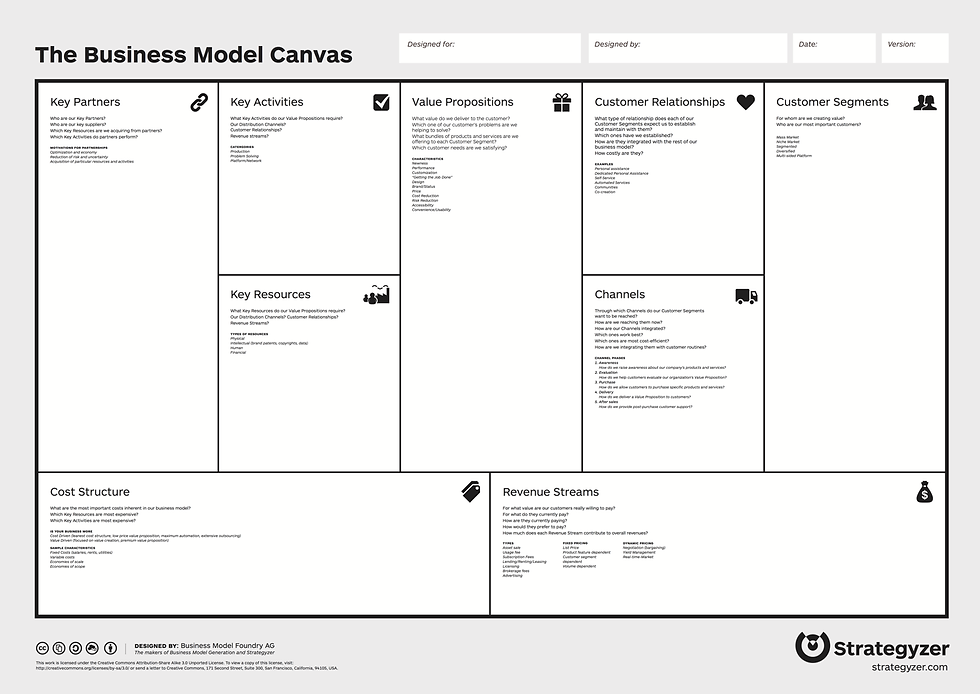
He calls Business Model Generation a genuinely comprehensive strategy framework, possibly the only one in wide use besides his own, and he argues the two fit together rather than compete. He also agrees with one of his readers that many companies give little thought to how they will capture value.
Martin’s image for a business that never designs for capture: a drive-in movie theater with no fence and no admission charge. The movie is good. People are watching, but the economics leak out in every direction, because nobody built the part that turns value created into value captured.
Most executives would tell you this is well covered at their institution. They would point to their budget, their asset/liability committee, and their price lists.
A budget forecasts how you will get paid. It doesn’t decide it.
This happens more in our industry than in most, for a structural reason. The revenue model is too often treated like a fact rather than a decision downstream of an intentional strategy.
Net interest margin feels like a function of the rate environment. Fee income reads like a function of what examiners will tolerate and competitors validate. Value capture gets treated as a logical output of the plan, instead of a strategic choice.
That is the fence nobody built.
Choosing is unglamorous work. It involves things like deciding that a segment is best served on a subscription rather than on transaction fees, or that a deposit relationship should be priced for duration rather than for volume. Those are strategic choices with different capabilities behind them, and they don’t happen until someone makes them.
Put two institutions next to each other, serving the exact same customers. The first earns on net interest margin, overdraft, wire fees, and foreign exchange. Its cost structure is real estate, salaries, and cost of funds. Its most important partners are the Fed, the Federal Home Loan Bank, and their major technology partners. Its delivery channel is a branch and a person across a desk.
The second earns on interchange and API fees. Its cost structure is cloud and marketing. Its most important partners are developers and fintechs. Its delivery channel is an app.
Same customers. Two completely different answers to how they get paid.
One of them decided, and the other one inherited without question.
I have used the Business Model Canvas in client work for years, usually alongside Blue Ocean Strategy, but not as a core tool. Martin’s chapter changed my mind about where it belongs.
The order matters, and I don’t think it is ambiguous.
Playing to Win comes first. Where will you play, and how will you win there? Those choices determine whether there is any value worth capturing at all. Start with the canvas and you will design a revenue model for a position you never chose.
Then map value capture. Once you know who you are serving and why they would pick you over the alternative, the canvas is a good visual for forcing the second half of that conversation into the open, on one page, in front of the whole leadership team.
Not as a planning exercise. As the place where somebody has to say out loud what the institution gets in return for the value it creates.
Questions worth asking before the next planning cycle:
Who decided how you get paid? Not who forecast it. Who decided it.
And if a competitor served your best customers tomorrow and made money in an entirely different way, would your team read that as a strategy, or file it as irrational pricing?


Comments